
If your car has just failed its MOT, the two things that decide everything are the grades on the failure sheet and whether your old certificate is still in date. Get those two right and you will know exactly what you can drive, what a retest costs, and by when.
This page walks through it step by step — the first 24 hours, the retest deadlines, your repair options, and how to appeal a fail you believe is wrong.
What happens the moment your car fails
The test centre issues a failure certificate (the VT30) listing every defect found, each graded dangerous, major or minor. The fail is recorded on the vehicle’s official DVSA record immediately — it is public, and anyone checking the car with our free MOT checker will see it.
Dangerous and major defects fail the car; minors and advisories do not, but they are recorded for next time. Keep the VT30: it is the document every repair quote and any appeal is based on.
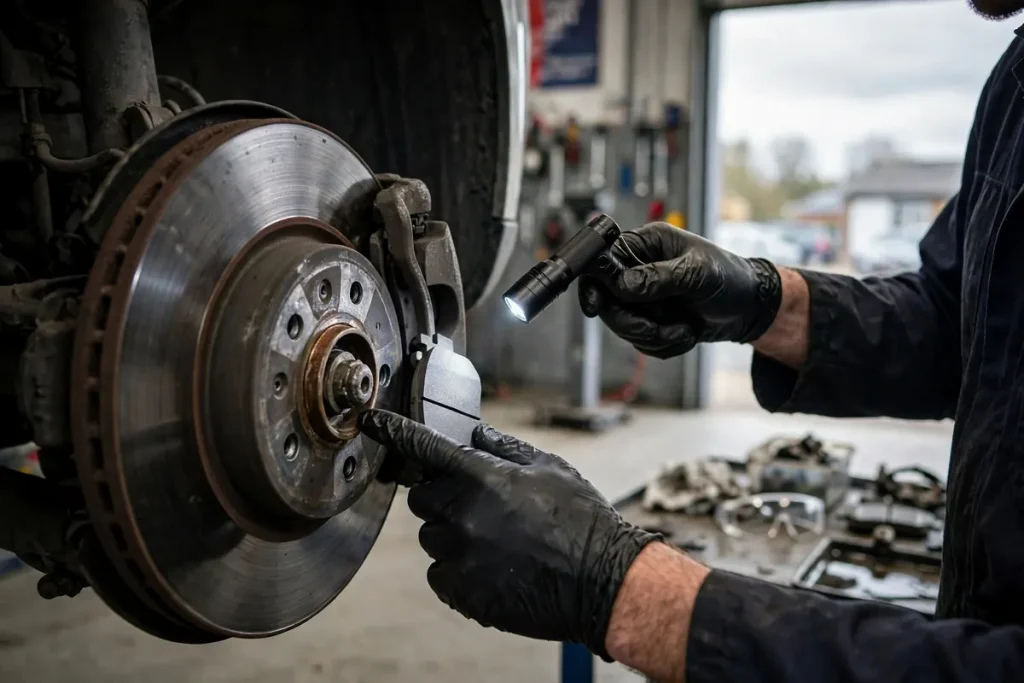
Can you still drive a car that has failed its MOT?
It depends on two questions: is your previous certificate still in date, and did the car receive a dangerous defect? The four combinations:
| Old certificate | Dangerous defect? | Can you drive it? |
|---|---|---|
| Still in date | No | Yes — until the old expiry date. The car must still be roadworthy, and the fail is on record. |
| Still in date | Yes | No. A dangerous defect makes the car illegal to drive immediately, whatever the old certificate says. Driving it risks a fine of up to £2,500, penalty points and a ban. |
| Expired | No | Only directly to a pre-booked MOT retest or a pre-arranged repair appointment, and the car must be roadworthy and insured. |
| Expired | Yes | No — it must be repaired where it is or recovered. Do not drive it at all. |
One warning that surprises people: taking your car for an early test does not protect you. If the car fails, that fail is on record from that moment — you do not get to pretend the test never happened, and if a dangerous defect was found, the car cannot be driven even though the old certificate has weeks left.
The retest rules — and your exact deadline
A partial retest covers only the items the car failed on, and in the right circumstances it is free. The rule that applies depends on where the car is repaired and how fast it comes back:
| Situation | Deadline | Retest cost |
|---|---|---|
| Car left at the test centre for repair | Retest within 10 working days | Free partial retest |
| Quick listed items only (bulbs, wipers, washers, mirrors, horn, number plates and similar) | Repaired and returned by the end of the next working day | Free partial retest |
| Car taken away and repaired elsewhere | Returned to the same centre within 10 working days | Partial retest fee (part of the full fee) |
| After 10 working days, or new faults beyond the original list | — | Full test at the full fee |
Only one partial retest is allowed per full test. “Working days” means Monday to Friday excluding bank holidays — so a car that fails on a Friday has until the Friday after next, roughly, but count carefully and do not gamble on the last day: if the deadline passes, you pay for a whole new test.
The official wording of the retest rules is in GOV.UK’s guide to getting an MOT.
Getting the car repaired — your options
You are never obliged to have the repairs done at the test centre. Your realistic options:
- Repair at the test centre. Simplest and keeps the free-retest routes open if the car stays there. Ask for an itemised quote against the VT30 before agreeing — every line should trace back to a listed defect.
- Take it to your own garage. Often cheaper, especially for welding, brakes and suspension. The driving rules in the table above decide how the car may legally get there; for a dangerous defect, that means a recovery truck, not a careful drive.
- Do the simple items yourself. Bulbs, wiper blades, tyres and fluids are legitimate DIY fixes and sit on the free next-working-day retest list. Keep receipts for parts.
Whatever you choose, get the quote in writing, and be wary of work that is not on the failure sheet being presented as “needed for the MOT”. The test covers the listed defects on retest — nothing else.
Think the fail is wrong? How to appeal
If you believe the car should have passed (or should not have passed, after buying one), you can appeal to the DVSA. Two rules matter more than everything else: appeal within 14 working days of the test, and do not have the disputed items repaired first — once they are repaired, there is nothing left for the DVSA to inspect and the appeal is effectively over. The DVSA will arrange for an officer to re-examine the vehicle; if the appeal succeeds, the result is corrected.
Start from the appeals section of GOV.UK’s MOT guide. Disagreeing with an advisory is not grounds for appeal — appeals concern the pass/fail decision itself. Our full guide to appealing an unfair MOT fail walks through the process step by step.
What will the repairs cost?
It depends entirely on what failed. The failures on our common failures list split into three rough bands: cheap consumables (bulbs, wipers, screenwash — a few pounds), mid-range wear items (tyres, brake pads and discs, suspension components — the bulk of most repair bills), and the one that ends cars: structural corrosion.
Welding repairs to sills and mounting points are labour-heavy, and on a low-value car the honest answer is sometimes that the repair costs more than the car is worth. Get two itemised quotes before deciding, and weigh them against the car’s value with a fixed MOT, not its value as a failure.
Failed MOT questions
Does a failed MOT show on the car’s history?
Yes, immediately and permanently. The fail, its date and every defect are added to the public DVSA record the moment the test ends — which is why a fail-then-quick-pass pattern is visible to any buyer who checks.
Can I sell a car that has failed its MOT?
Yes. There is no law against selling a car with no MOT, but you must not describe it as roadworthy if it is not, and the buyer can only drive it away within the same rules above — to a pre-booked test or repair, if at all. Most failed cars are sold for repair or parts and priced accordingly.
Can I just take it to a different test centre for a second opinion?
You can book a full test elsewhere at the full fee, but the first fail stays on the record, and the second centre can see it. If you believe the first decision was wrong, the DVSA appeal (above) is the route that can actually overturn it — and it costs nothing to start.
How long do I have to fix the car?
There is no legal deadline to repair a failed car that you are not driving — it can sit on private land, declared SORN if it is also untaxed. The deadlines that matter are the retest windows above (10 working days for a partial retest) and the 14-working-day appeal window.
The rules, deadlines and penalties on this page were checked against DVSA and GOV.UK guidance in November 2026. Check where any car stands right now with the MOT checker, and know your dates with the MOT due date guide.